
Snowflake is our top data management pick for 2026 if your team needs a place to store and analyze data without managing database infrastructure. It works across AWS, Azure, and Google Cloud. Fivetran and dbt are our other top picks for bringing data in and preparing it for analysis.
In this guide, we’ll compare 20 tools across storage, integration, transformation, governance, and reporting. We’ll cover what each one does best, what it costs, and where it might fall short, so you can choose the right tools for your stack.
Top 3 Side by Side
Top Pick

Snowflake
See pricing Visit Snowflake →From $2 per credit (Standard, per-second compute)
Storage about $23 per TB per month
30-day free trial
- Runs on AWS, Azure and Google Cloud
- Native Apache Iceberg tables with an open Polaris catalog
- Auto-suspend warehouses and per-second billing
Managed ELT

Fivetran
See pricing Visit Fivetran →Free plan: 500,000 monthly active rows
Paid: usage-based MAR per connection
$5 base charge per paid connection
- 700+ managed connectors
- 15-minute syncs on Standard, 1-minute on Enterprise
- Now one company with dbt Labs
Transformation

dbt
See pricing Visit dbt →dbt Core: free, Apache 2.0
Developer: free (1 seat, 3,000 models a month)
Starter: $100 per user per month
- SQL models with tests, docs and lineage
- Rust-based Fusion engine in dbt Core v2
- Semantic Layer on open source MetricFlow (API on paid plans)
Key Takeaways 🔍
- Snowflake is our top-rated pick, on all three major clouds with per-second billing, from $2 per credit on Standard, with a 30-day free trial
- Prices span free to enterprise: Airflow, dbt Core and Metabase cost nothing, Fivetran’s free plan covers 500,000 monthly active rows, and Collibra lands around $170K a year
- Fivetran bills monthly active rows per connection, plus a $5 base charge per paid connection since January 2026; users report bills 40% to 70% higher on multi-connector setups, so count your connectors first
- Choose Microsoft Purview for governance on a Microsoft stack: scanning is free and governed assets cost about $0.50 each per month
- Eight 2024 picks are gone in their old form: Alooma and Blendo were absorbed, Dataform now ships only inside Google Cloud, Mode lives inside ThoughtSpot, and Talend Open Studio was retired on January 31, 2024
What Changed Since Our Last Guide
We revisited our original 34-tool list, kept nine tools, and added 11 newer options.
Four big names in this category changed owners inside seven months: Fivetran and dbt Labs completed their merger on June 1, 2026, Salesforce closed on Informatica on November 18, 2025, IBM took Confluent on March 17, 2026, and SAP bought Reltio in May 2026. Open table formats pull the other way: Snowflake, Databricks, Google and AWS all implement the Iceberg REST catalog, so the warehouse locks you in less than in 2024 and the catalog locks you in more.
For teams building a modern stack this year, data management tools remain the hardest budget line to size. Options run from free open source (Apache Airflow, dbt Core, Metabase) to governance and master data management contracts in six figures: expect around $170K a year for Collibra, and $200K to $500K for a full Informatica IDMC plus MDM rollout.
Most tools below share the basics: connectors or plain SQL access, role-based permissions, and usage-based billing with a free tier or trial. Prices climb with data volume (monthly active rows, credits, TiB scanned), seats, governance and quality modules, and SLA-backed support.
How We Chose These Tools
We went hands-on with all 20 tools for this update: we connected the same SaaS and database sources, loaded them into each warehouse, modeled and scheduled the pipeline, cataloged and monitored the tables, then built dashboards on top. Prices are what each vendor charged when we re-tested in October 2026, and every price below shows its billing basis, because usage-billed tools swing far more than seat prices.
Here are the tools we would shortlist for each layer, in the order teams build a stack: storage first, BI last.
Data Management Tools Comparison Table
Take a look at our top picks side by side to see which one fits your workflow:
| Snowflake | Fivetran | dbt | Apache Airflow (Astronomer) | Atlan | |
|---|---|---|---|---|---|
| Best for | Best overall data platform | Managed ELT | SQL transformation | Pipeline orchestration | Self-serve data catalog |
| Starting price | $2 per credit, Standard (per-second compute, plus about $23 per TB-month storage) | Usage-based on monthly active rows per connection; $5 base charge per paid connection | Starter $100 per user per month (up to 5 seats) | Airflow free; Astro deployments from $0.35 an hour | Quote-based; expect around $50K a year |
| Free plan or trial | 30-day free trial | Free plan (500,000 MAR) plus 14-day trial per connection | Free Developer plan (1 seat, 3,000 models a month); dbt Core free | Open source (Apache 2.0) | None listed; demo on request |
| Stack layer | Storage (warehouse) | Ingestion | Transformation | Orchestration | Catalog and governance |
| Billing basis | Credits per second plus storage per TB | Monthly active rows per connection | Seats plus successful models built | Deployment-hours plus worker-hours | Annual contract |
| Recommended for | Most data teams on any cloud | Teams that would rather pay than maintain connectors | Analytics engineers who live in SQL | Python-fluent data engineers | Mid-size and larger data orgs |
Our Top 20 Data Management Tools
- Snowflake
- Google BigQuery
- Databricks
- ClickHouse
- Fivetran
- Airbyte
- Apache Kafka and Confluent
- dbt
- Apache Airflow and Astronomer
- Dagster
- Atlan
- Microsoft Purview
- Collibra
- Informatica IDMC
- Profisee
- Monte Carlo
- Hightouch
- Microsoft Power BI
- Tableau
- Metabase
1. Snowflake
Storage Layer: The Cloud Warehouse That Runs on Every Major Cloud
Every other layer gets chosen around the warehouse, and Snowflake does not force a cloud choice first: it runs the same way on AWS, Azure and Google Cloud, bills compute per second, and auto-suspends idle warehouses.
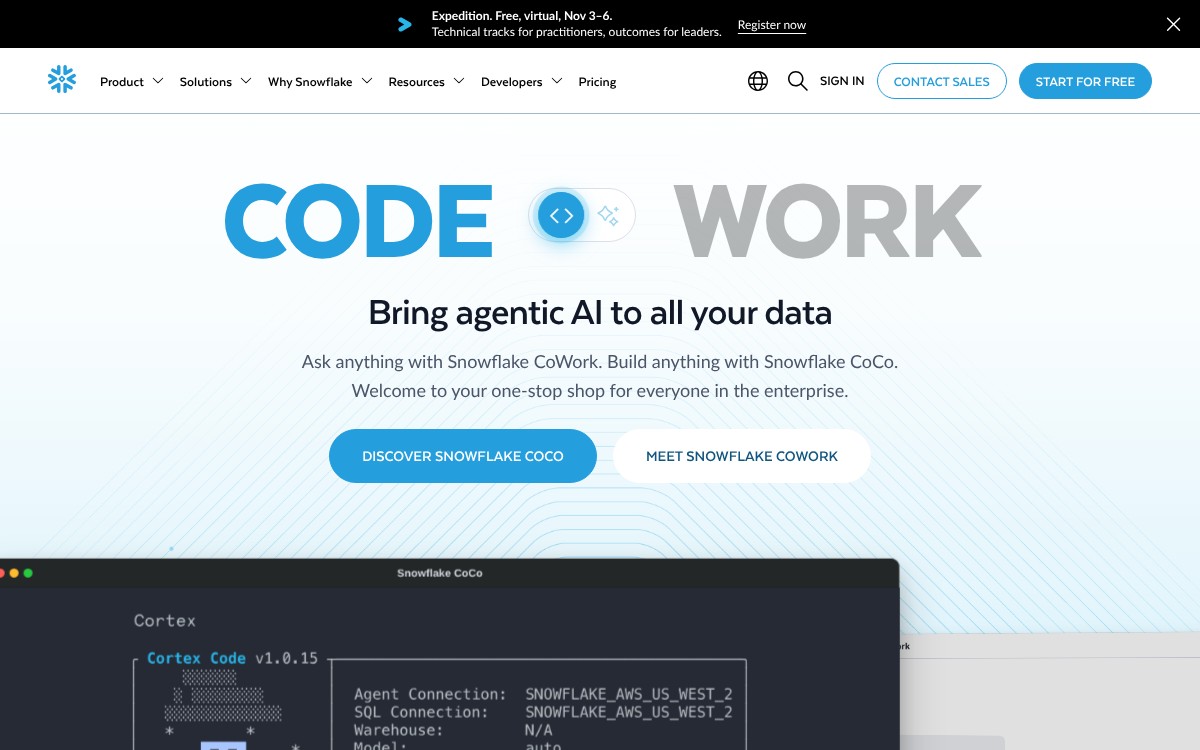
Native Iceberg tables behind the open Polaris catalog, an Apache top-level project since February 18, 2026, keep your data readable from Databricks, Google or AWS engines. The drawback is the idle meter: a Medium warehouse running around the clock on Enterprise costs 4 credits x 24 hours x 30 days x $3, about $8,640 a month, so set auto-suspend to 60 seconds and add a resource monitor with a credit quota first.
Summary: If you’re choosing a warehouse today and don’t already live inside one cloud’s ecosystem, start here. Plans (October 2026, US regions, billed per second of compute with a 60-second minimum):
- Standard: $2 per credit
- Enterprise: $3 per credit
- Business Critical: $4 per credit
- Storage: about $23 per TB per month
2. Google BigQuery
Storage Layer: Serverless Warehouse With a Free Monthly Query Allowance
There is no cluster to size with BigQuery. The first 1 TiB of queries and 10 GiB of storage a month are free, then on-demand is $6.25 per TiB scanned; past about $5K to $10K a month of steady compute, Editions slot-hour capacity gets cheaper.
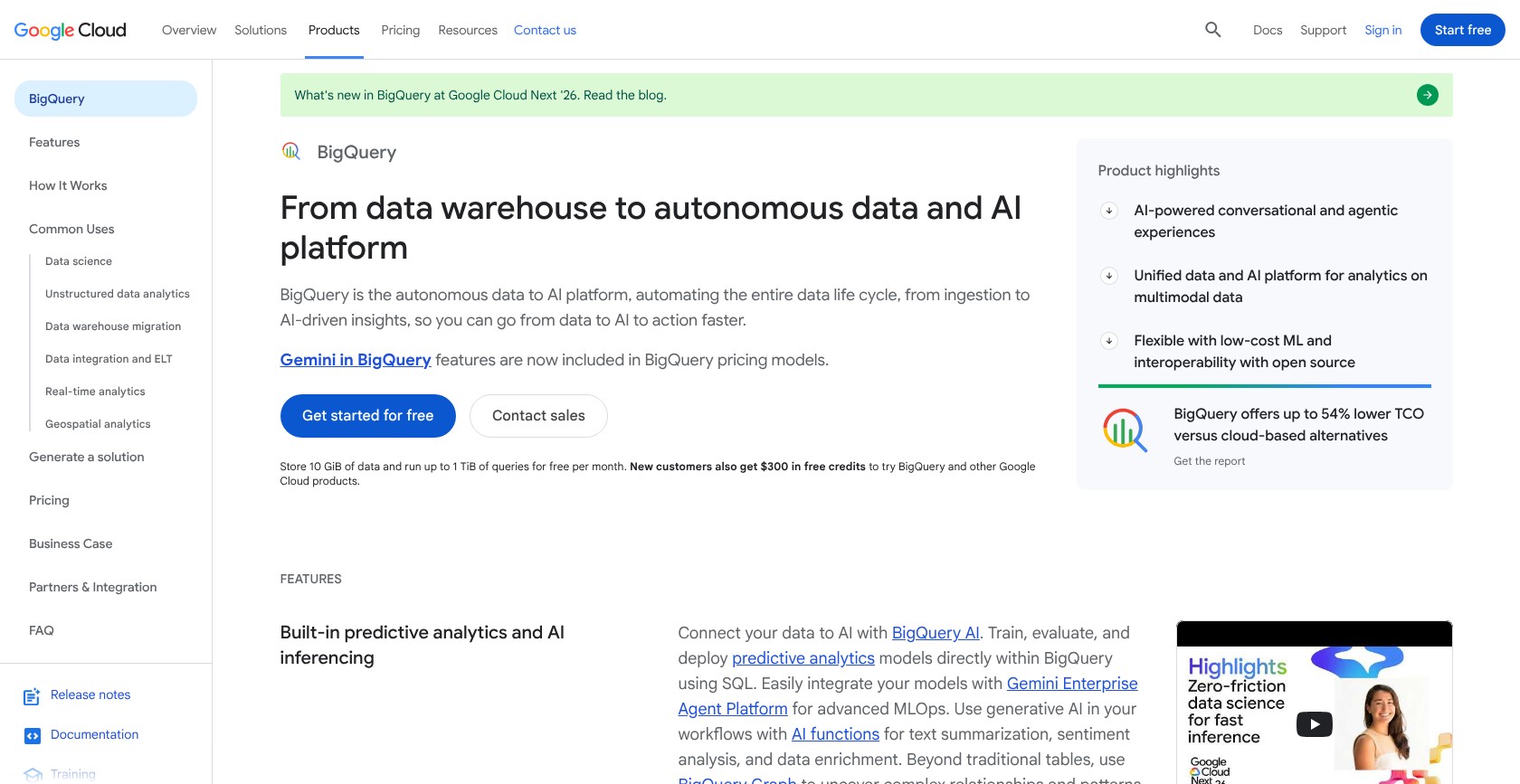
The scan meter is the trap: a SELECT * over a large unpartitioned table can cost tens of dollars, so partition by date and require a partition filter. It pairs naturally with Looker and Data Studio (Looker Studio until April 2026), and Dataform, a 2024 pick, now lives inside BigQuery.
Summary: Best for teams on Google Cloud or anyone who wants a warehouse with no ops; skip on-demand pricing if analysts write unbounded queries. Pricing (October 2026):
- On-demand: $6.25 per TiB scanned, first 1 TiB a month free
- Storage: first 10 GiB a month free
- Editions: slot-hour capacity, with commitments for steady workloads
3. Databricks
Storage Layer: Lakehouse for Data Engineering and Machine Learning
Delta Lake still has the largest open table format installed base, so why did Databricks buy Tabular, founded by Iceberg’s creators? Because the platform now reads and writes both formats (Iceberg v3 in preview on Databricks Runtime 18 since April 2026).
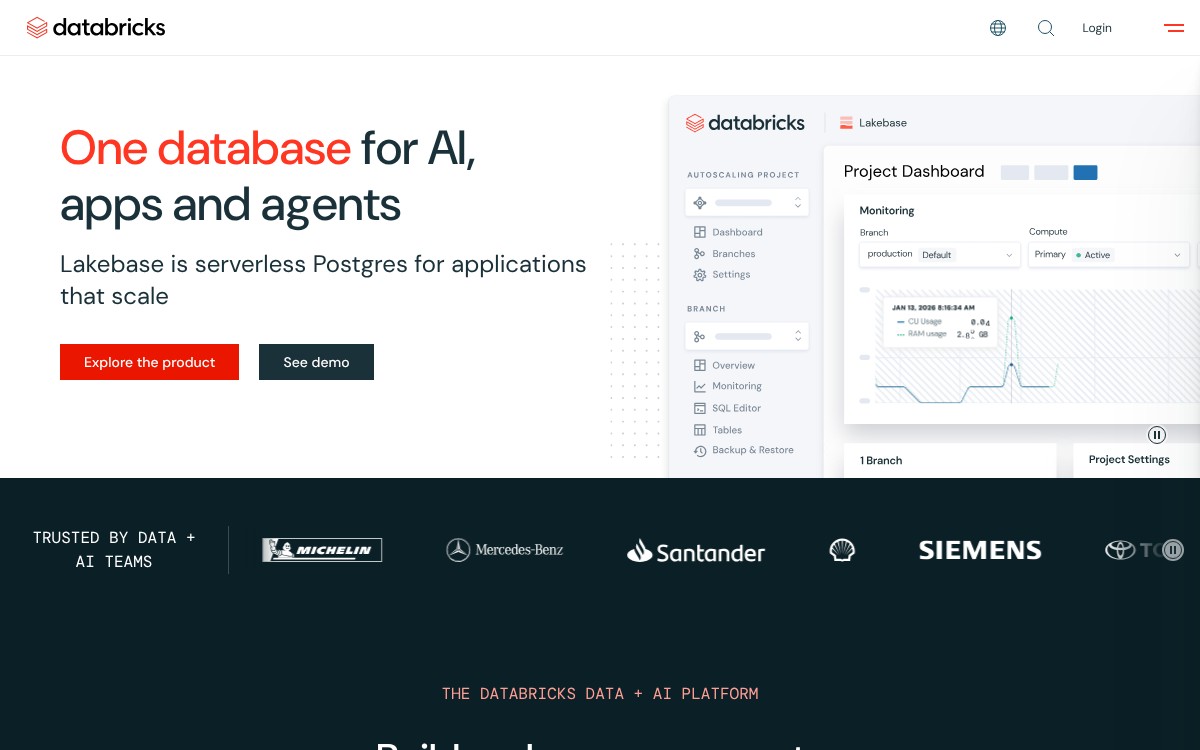
Unity Catalog went open source under Apache 2.0 in June 2024. The bill is the hard part: DBUs per second across many SKUs, plus a separate cloud VM charge on classic compute; SQL Serverless is the easiest SKU to forecast because the VM cost is folded in.
Summary: Compared with Snowflake, Databricks gives you more control and better ML tooling for more engineering time and a harder bill to forecast. Pricing (October 2026, AWS Premium list rates per DBU, pay as you go):
- Jobs Compute: about $0.15
- SQL Classic: $0.22; SQL Pro: $0.55
- All-Purpose Compute: about $0.55
- SQL Serverless: about $0.70
4. ClickHouse
Storage Layer: Open Source Engine for Real-Time Analytics
ClickHouse Cloud compute scales to zero when idle and bills per minute, so a dashboard backend that sits quiet overnight costs nothing for those hours. The columnar engine is built for aggregations over billions of rows; the open source edition is free to self-host.
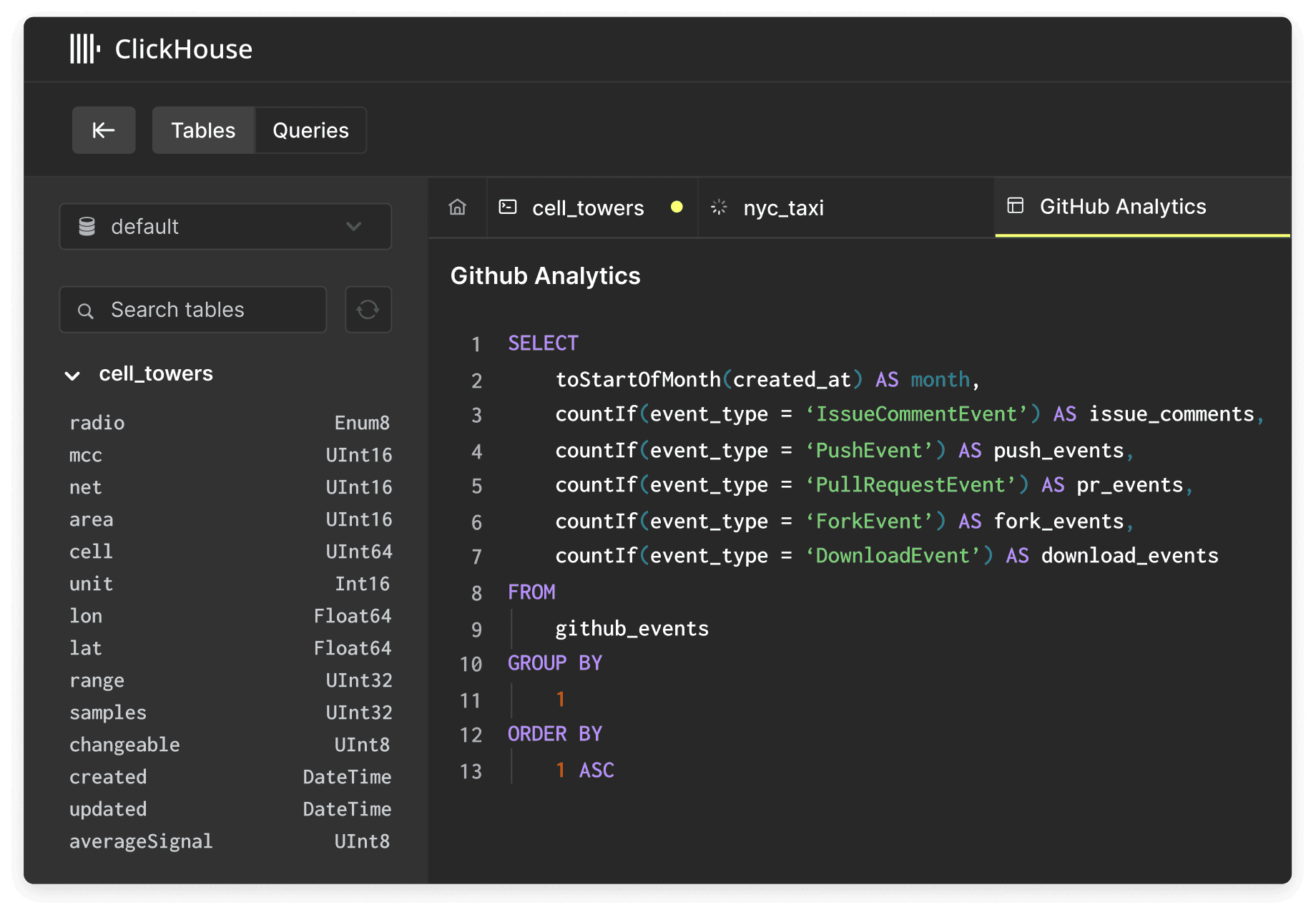
It is not a general-purpose warehouse: heavy joins and frequent updates are weak spots, so most teams run it beside Snowflake or BigQuery, not instead.
Summary: Skip it as your only warehouse; add it when real-time or embedded analytics outgrow Snowflake or BigQuery. Plans (ClickHouse Cloud, October 2026, compute per minute in units of 8 GiB RAM and 2 vCPU):
- Open source: free
- Basic: about $0.22 per unit-hour
- Scale: about $0.30 per unit-hour, from around $499 a month
- Storage: about $25.30 per TB per month
5. Fivetran
Ingestion Layer: Managed ELT With the Deepest Connector Catalog
Every hand-built API script breaks the day a vendor changes its schema; Fivetran’s 700+ managed connectors move that maintenance off your team. Since 2024 it merged with dbt Labs (June 1, 2026), bought Census (now Fivetran Activations) and became steward of GX Core.
Billing is by Monthly Active Rows, per connection since March 2025, plus a $5 base charge on paid connections since January 2026. What users say: multi-connector bills ran 40% to 70% higher, and some doubled; pull MAR per connection first and drop the low-value connectors that now carry the base charge. Stitch, our 2024 pick, still sells from $100 a month under Qlik.
Summary: The least work per connector of anything we tested, and the hardest bill to forecast. Plans (October 2026, usage-based on MAR per connection):
- Free: 500,000 MAR and 5,000 monthly model runs
- Standard: 700+ connectors, 15-minute syncs, unlimited users
- Enterprise: 1-minute syncs
- Business Critical: quote-based
6. Airbyte
Ingestion Layer: Open Source ELT You Can Self-Host or Rent
What does ELT cost when you stop paying per row? Airbyte Core is open source and free to self-host, Airbyte Cloud bills in credits, and Pro and Enterprise Flex bill capacity in Data Workers, so cost tracks pipelines rather than rows.
Self-hosting Core on Kubernetes means running several services, Temporal included. What users say: out-of-memory failures at scale, a stuck Temporal service returning 502s until someone intervenes, failed upgrade migrations, and uneven quality across beta and alpha connectors.
Summary: Best for engineering-led teams with Kubernetes skills or a Fivetran bill they want to cap. Skip self-hosting if nobody owns the cluster. Plans (Airbyte Cloud, October 2026; 14-day trial with 400 credits):
- Core: free, open source, self-hosted
- Standard: from $20 a month (5 credits; extra credits $5 each)
- Plus: from $189 a month (40 credits) to $4,999 (2,000 credits)
- Pro and Enterprise Flex: custom, capacity-based
7. Apache Kafka and Confluent
Streaming Layer: The Open Source Event Backbone and Its Managed Cloud
Apache Kafka 4.0, released March 18, 2025, removed ZooKeeper entirely: KRaft is the only mode, so a cluster still on ZooKeeper must migrate within a 3.x release before upgrading. Confluent is the managed route for the same engine, not a rival; IBM closed its acquisition on March 17, 2026 at about $11B.
Confluent Cloud bills elastic capacity in eCKU-hours plus data in, data out and storage. Basic costs $0 at zero use and covers a development pipeline; Dedicated clusters bill whether used or not.
Summary: If you need events in seconds and nobody to run brokers, start on Confluent Cloud Basic; self-host Kafka once you have a platform team. Plans (Confluent Cloud, October 2026, per eCKU-hour):
- Apache Kafka: free, Apache 2.0
- Basic: about $0.14 (first eCKU free, $0 at zero use)
- Standard: about $0.75 (roughly a $385 a month floor)
8. dbt
Transformation Layer: The SQL Modeling Standard, Now Under Fivetran
Does dbt Core stay free now that Fivetran owns dbt Labs? Yes. dbt Core v2 runs on the Rust-based Fusion engine under Apache 2.0: SQL models with tests, docs and lineage from the command line, free. The managed platform adds an IDE, scheduling, CI and the Semantic Layer, whose API needs a paid plan even though MetricFlow has been open source since October 2025; Cube is the open source alternative.
What users say: one team’s staging run passed every check, then microbatch incremental models re-processed four years of order history in production. Run a full-refresh comparison in staging before you cut over.
Summary: The default transformation layer; run Core for free if you have CI and scheduling, pay for the platform if you don’t. Plans (October 2026, seats plus successful models built):
- dbt Core: free, Apache 2.0
- Developer: free (1 seat, 3,000 models a month)
- Starter: $100 per user per month (5 seats, 15,000 models)
- Enterprise: quote-based
9. Apache Airflow and Astronomer
Orchestration Layer: The Industry Standard Scheduler, Self-Hosted or Managed
Airflow 3.0 reached GA on April 22, 2025 with DAG versioning, event-driven scheduling and a new React UI; 3.3.0 followed on July 6, 2026. Self-hosting is still a standing ops job (scheduler, workers, metadata database, upgrades), and the task-centric model is less natural than asset-based orchestration when lineage matters.
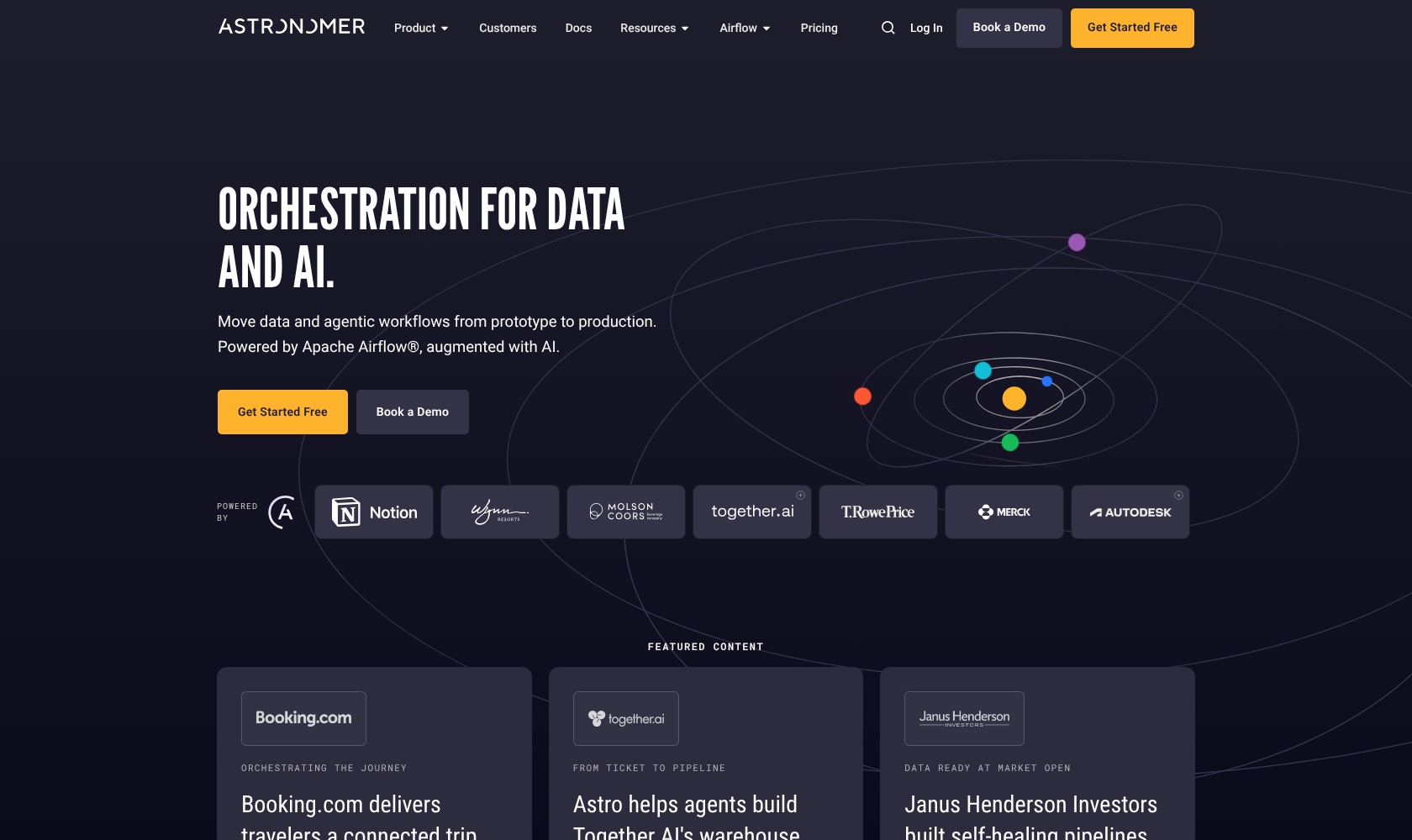
Astronomer‘s Astro is the managed route: deployments bill per hour and workers scale to zero when idle, though the deployment fee accrues even when a DAG is idle.
Summary: Best for Python-fluent teams that want the biggest operator ecosystem. Skip self-hosting if you don’t have someone to own upgrades. Plans (October 2026):
- Apache Airflow: free, Apache 2.0
- Astro Developer: deployments from $0.35 an hour
- Astro Team: from $0.42 an hour; dedicated clusters from $2.40 an hour
- Workers: from $0.13 an hour, scaling to zero
- Business and up: quote-based annual contracts
10. Dagster
Orchestration Layer: Asset-Based Pipelines With Lineage Built In
Airflow tells you a task failed. Dagster tells you which table is stale and what depends on it, because pipelines are defined as software-defined assets with lineage and testing built in. Each dbt model becomes an asset, so your transformation graph and your schedule are the same graph.
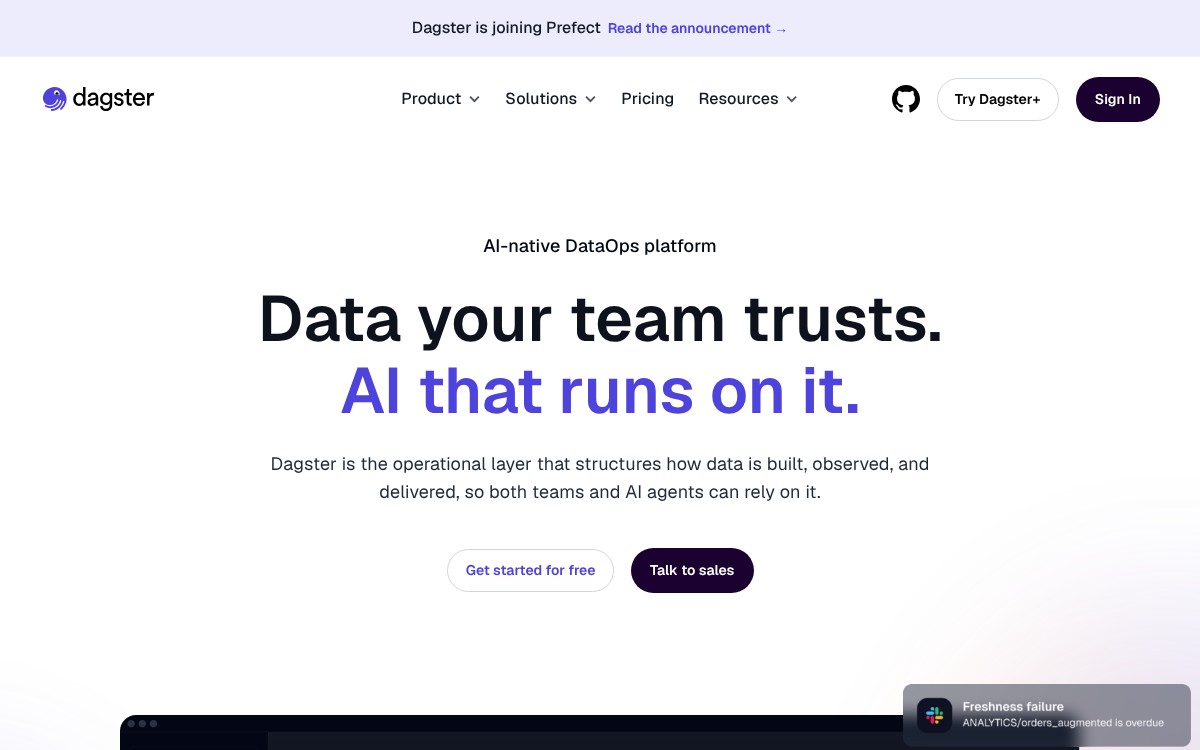
The ecosystem is smaller than Airflow’s, and credit-per-materialization billing needs watching, since a credit is one asset materialization or op execution.
Summary: Pick Dagster over Airflow if you’re starting fresh with dbt at the center; pick Airflow if you need its operator library. Plans (Dagster+, October 2026; serverless compute $0.010 a minute; 30-day trial):
- Open source: free
- Solo: $10 a month (1 user, $0.040 per credit)
- Starter: $100 a month (3 users, 5 code locations, $0.035 per credit)
- Pro: quote-based
11. Atlan
Governance Layer: Self-Serve Catalog Built for Modern Stacks
Users revert to tribal knowledge as soon as catalog search turns irrelevant, which is why Atlan‘s pitch is adoption: search that works and column-level lineage from dbt and the warehouse.
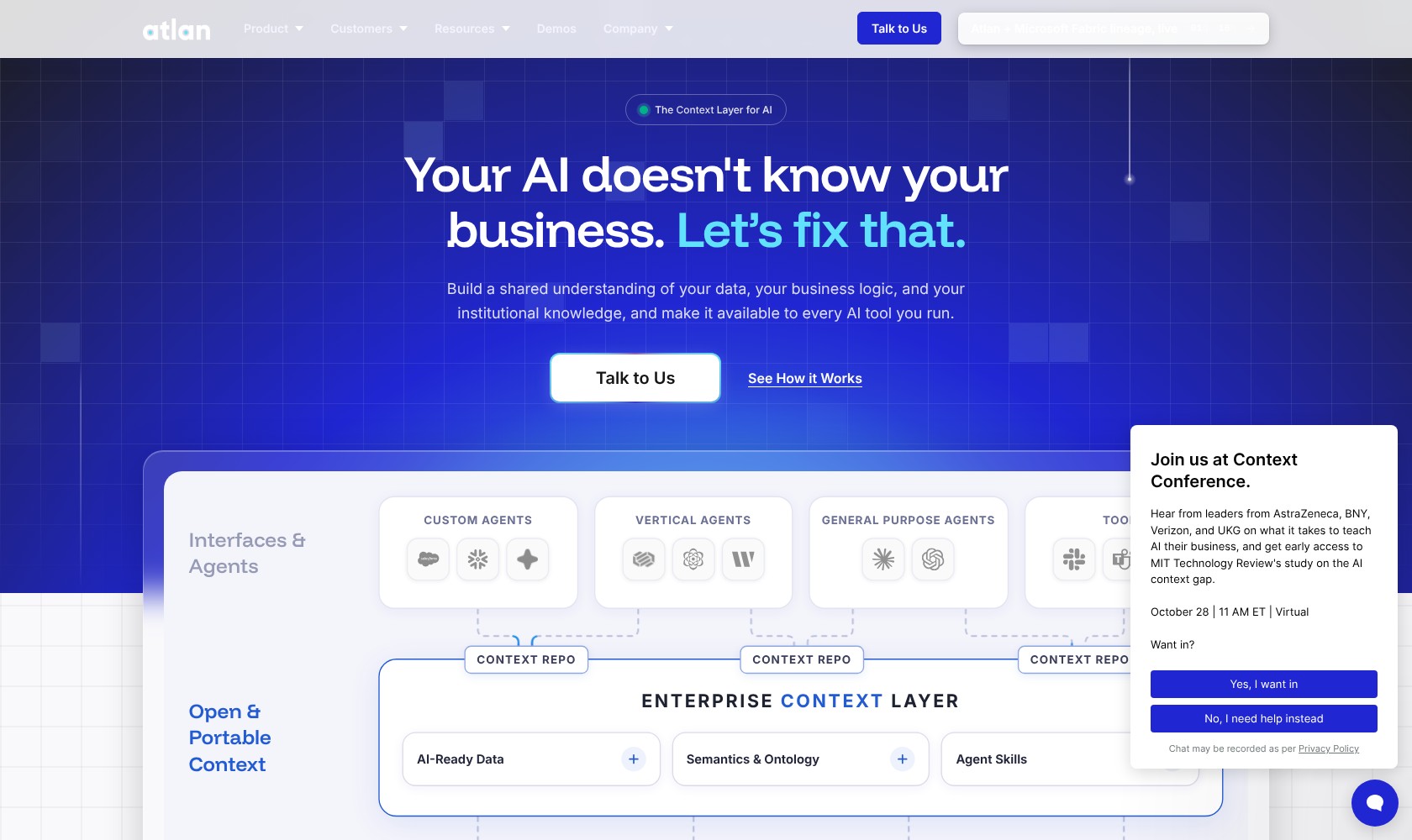
Alation is the long-standing alternative with heavier stewardship workflows, from around $60K a year. Atlan’s drawback is the price you cannot see: quote-only, with full-module deals past $400K.
Summary: If your problem is that people can’t find or trust tables, and you run a modern cloud stack, shortlist Atlan first. Pricing (October 2026, annual contracts, quote-based):
- Team (20 to 30 users): expect around $25K to $50K a year
- Business (30 to 50 users): expect around $60K to $100K a year
- Enterprise: full-module deals can exceed $400K a year
12. Microsoft Purview
Governance Layer: Pay-Per-Asset Catalog for Microsoft Estates
Scanning sources into the Purview Data Map is free; you pay only when an asset is governed (linked to a data product or critical data element), at $0.0165 per asset per day, about $0.50 a month, the cheapest governance entry on this list.
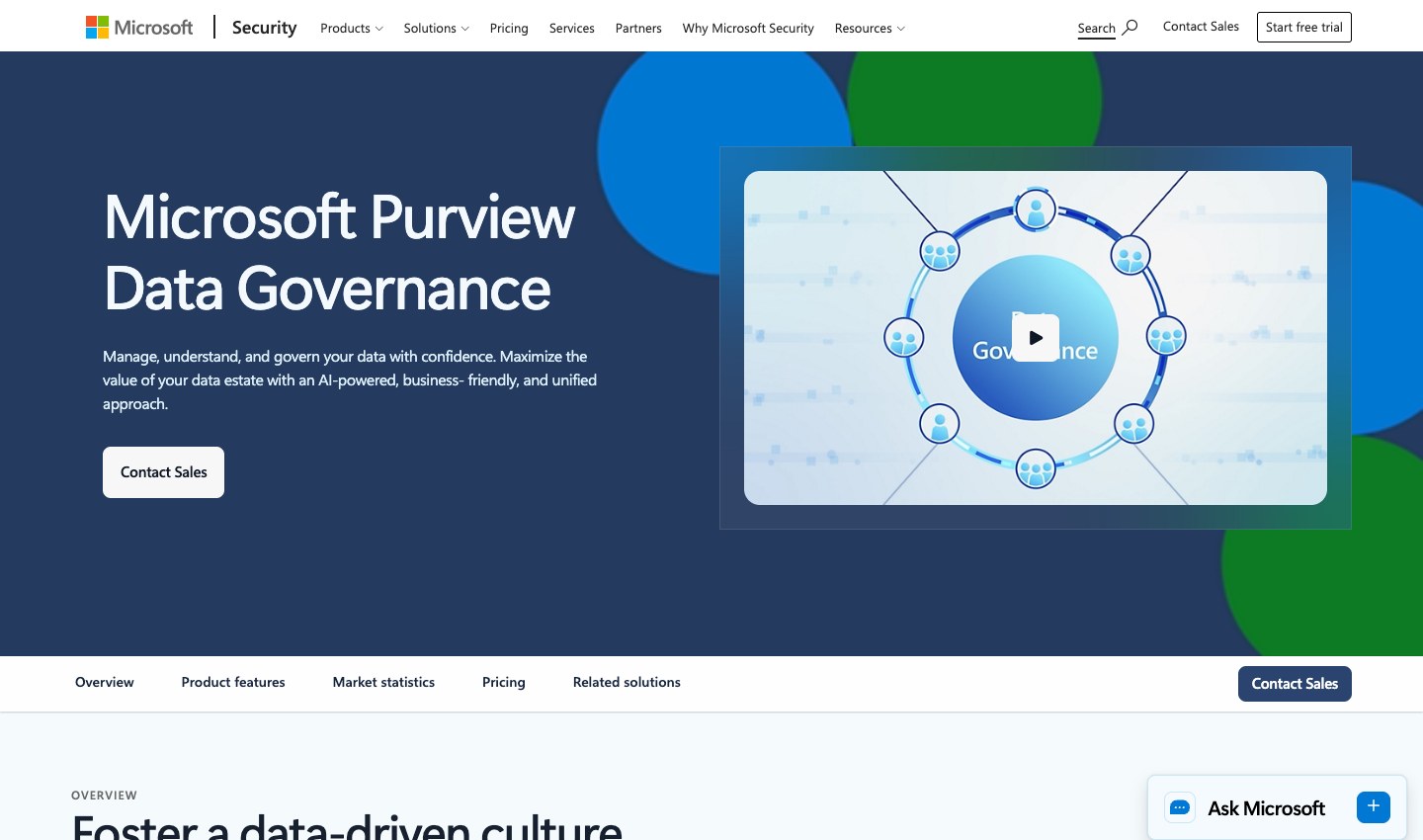
The fit is Azure, Microsoft 365 and Fabric estates; pay-as-you-go began January 6, 2025 and needs an Azure subscription linked to the tenant. Data quality jobs add a second meter.
Summary: Best for Microsoft shops starting a governance program. Skip it if most of your data lives in Snowflake or Databricks and nowhere near Azure. Pricing (October 2026, pay-as-you-go):
- Data Map scanning: free
- Unified Catalog: $0.0165 per governed asset per day (about $0.50 a month)
- Data quality and health jobs: $15, $60 or $240 per governance processing unit by tier
13. Collibra
Governance Layer: Policy-First Governance for Regulated Industries
When a regulator asks who owns a data element and which policy covers it, Collibra’s workflow and policy engine is built to produce that answer. It stays from 2024 for its deep policy management, stewardship workflows, business glossary, and reference data management under one roof.
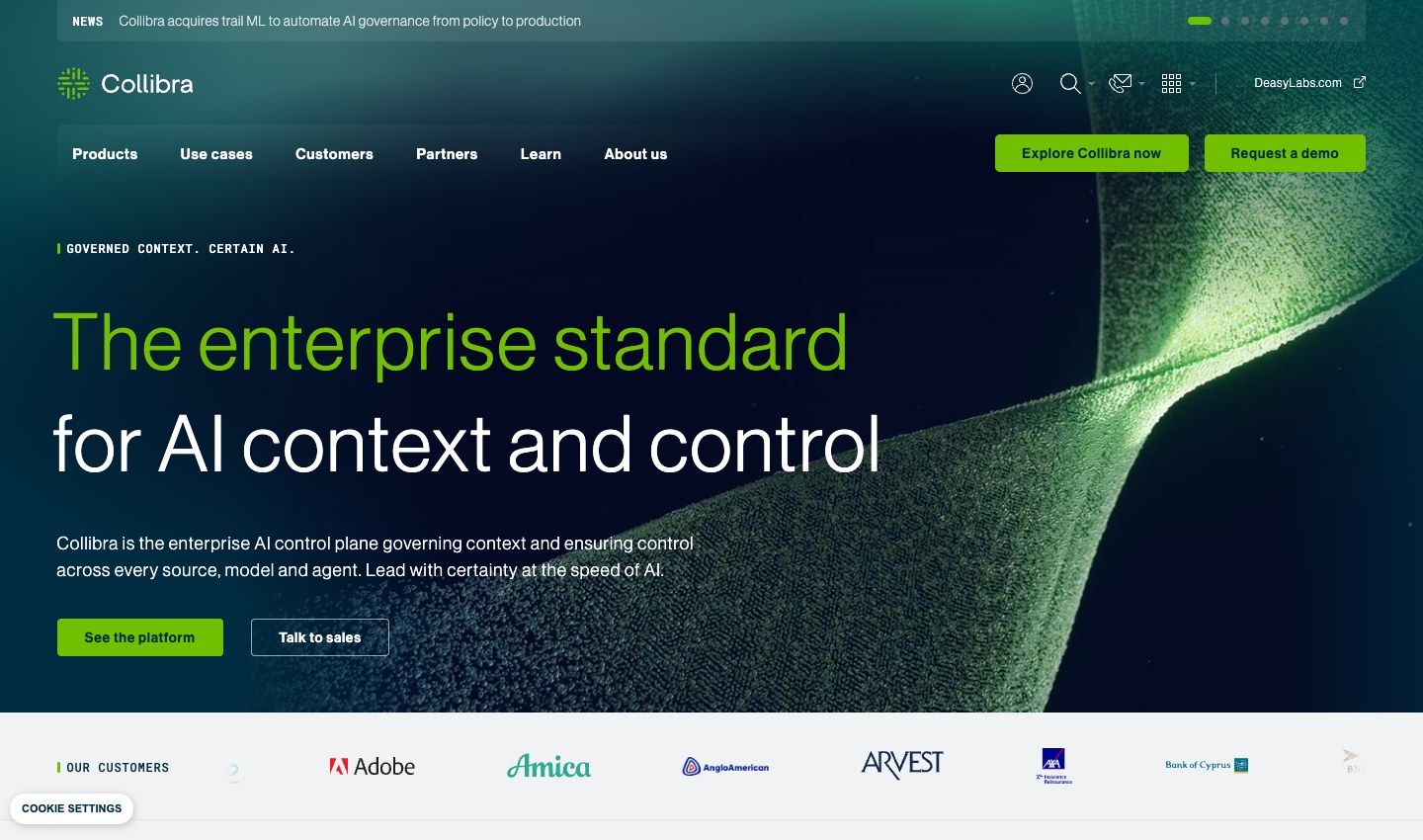
Implementations average about six months, business users find the governance-first interface heavy, and lineage, quality and privacy are separate modules on top of the base contract.
Summary: Collibra is the right buy when compliance drives governance; for discovery-first teams it’s more platform than you need. Pricing (October 2026, annual contracts, quote-based; multi-year discounts are common):
- List price: $170K a year
- Entry deployments (up to about 500 users): expect $180K to $250K a year
- Enterprise: expect $180K to $2.5M+ a year
- Modules: lineage, quality and privacy priced separately
14. Informatica IDMC
MDM and Integration Layer: The Broadest Enterprise Suite, Now Owned by Salesforce
Our 2024 list carried PowerCenter and MDM Reference 360 separately; both now live inside Intelligent Data Management Cloud, and Salesforce closed its roughly $8B acquisition on November 18, 2025.
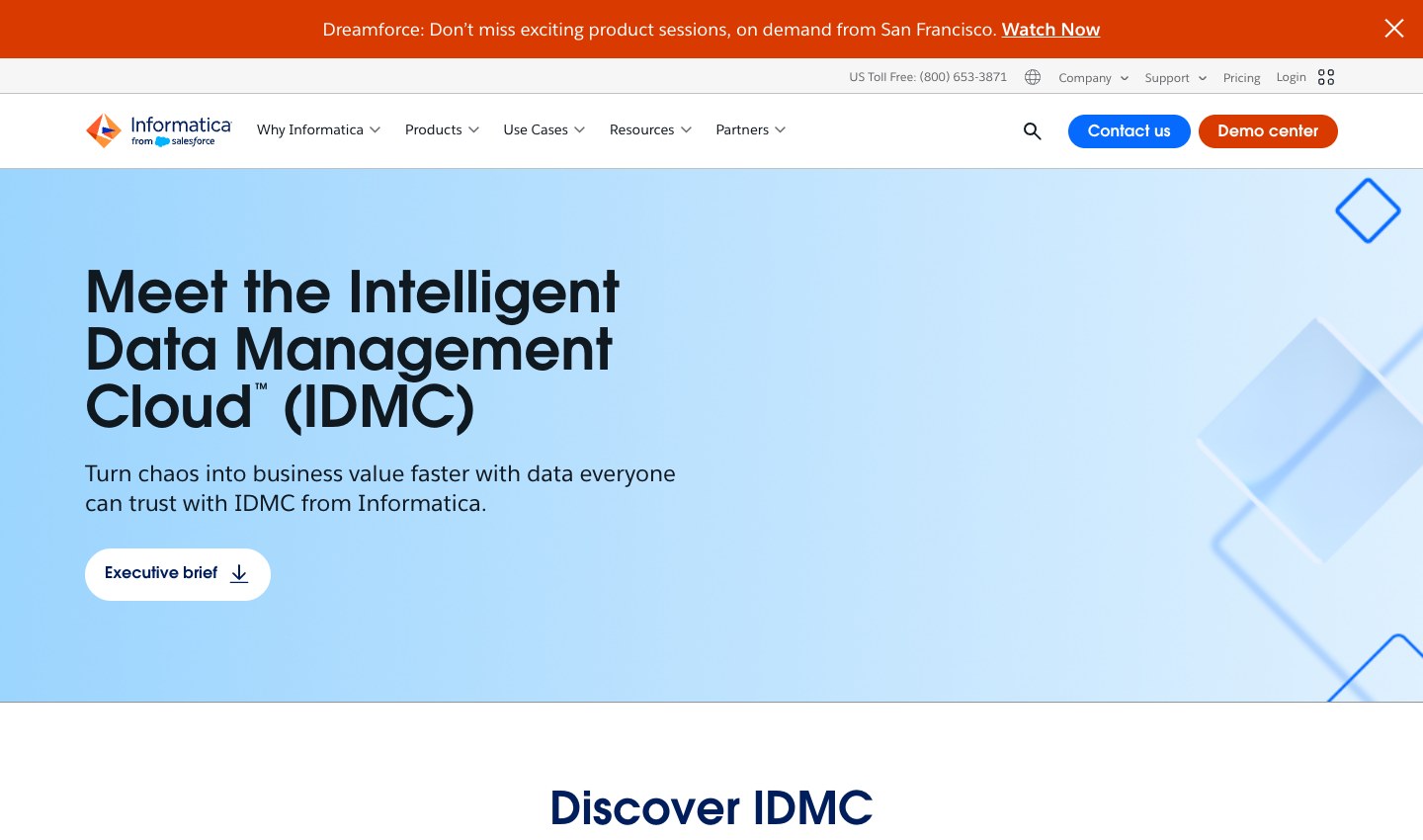
Billing runs on Informatica Processing Units that scale with data volume, users and enabled services, with MDM priced per domain on top. A free, IPU-limited Cloud Data Integration tier exists, and a 120 IPU per month annual contract lists at $131,760 ($91.50 per IPU per month).
Summary: Skip it unless you have hundreds of systems and a budget line for implementation partners. Pricing (October 2026, annual IPU contracts):
- Integration only: expect $50K to $75K a year
- Integration plus data quality: expect $100K to $150K a year
- Full IDMC plus MDM: expect $200K to $500K+ a year
15. Profisee
MDM Layer: Golden Records for Microsoft-Centric Teams
The same customer shows up three ways across CRM, ERP and billing; a catalog can only describe that mess at read time, while master data management decides at write time which version may exist. Profisee, kept from 2024, does that with match-and-merge rules and stewardship workflows in volume-based editions that fit Microsoft and Azure estates.
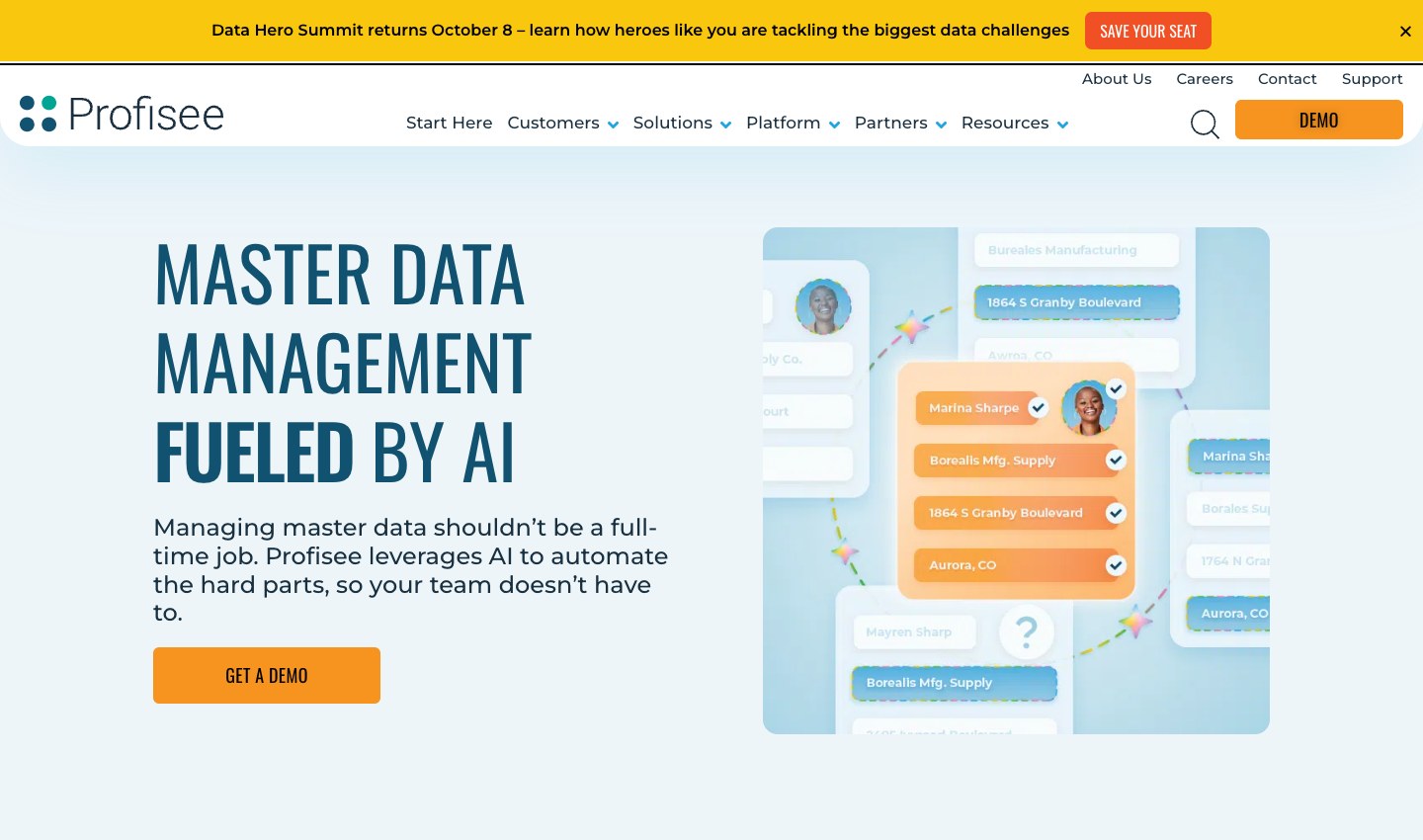
Reltio now belongs to SAP (closed May 7, 2026; still sold standalone, pricing undisclosed), Semarchy xDM prices by golden record count, and TIBCO EBX has sold as ON EBX since March 2026. Typical MDM deals run $200K to $2M+; Profisee’s entry point is the outlier.
Summary: If you’re on Microsoft and need golden customer or product records without a seven-figure program, start with Profisee. Pricing (October 2026, quote-based, volume-based editions):
- Entry editions: expect from about $30K a year
- Larger editions: priced by record volume and domains
16. Monte Carlo
Quality and Observability Layer: Catch Broken Data Before Your Dashboards Do
Monte Carlo catches the broken pipeline before the CFO’s dashboard does: it monitors freshness, volume and schema across warehouse tables, with lineage to show the blast radius. What users say: real issues surface within days of setup, but default monitors are noisy in high-volume pipelines and need threshold tuning, and usage-based spend can escalate.
dbt tests cover the basics free; GX Core is open source under Fivetran stewardship; Soda has a free tier and a $750 a month Team plan (Soda Core is now source-available, not open source).
Summary: Next to dbt tests or Soda, Monte Carlo costs far more but needs far less setup to cover every table. Pricing (October 2026, quote-based; scales with tables, sources and seats):
- Mid-size environments: expect $30K to $80K a year
- Typical contract: around $50K to $60K a year
- Large environments: $150K+ a year
17. Hightouch
Activation Layer: Reverse ETL From Your Warehouse to Business Apps
Hightouch‘s free tier syncs warehouse audiences into Salesforce, HubSpot or ad platforms with 2 active syncs and unlimited destinations and seats. Census was acquired by Fivetran in May 2025 and sells as Fivetran Activations on monthly active row pricing, which leaves Hightouch as the main independent option.
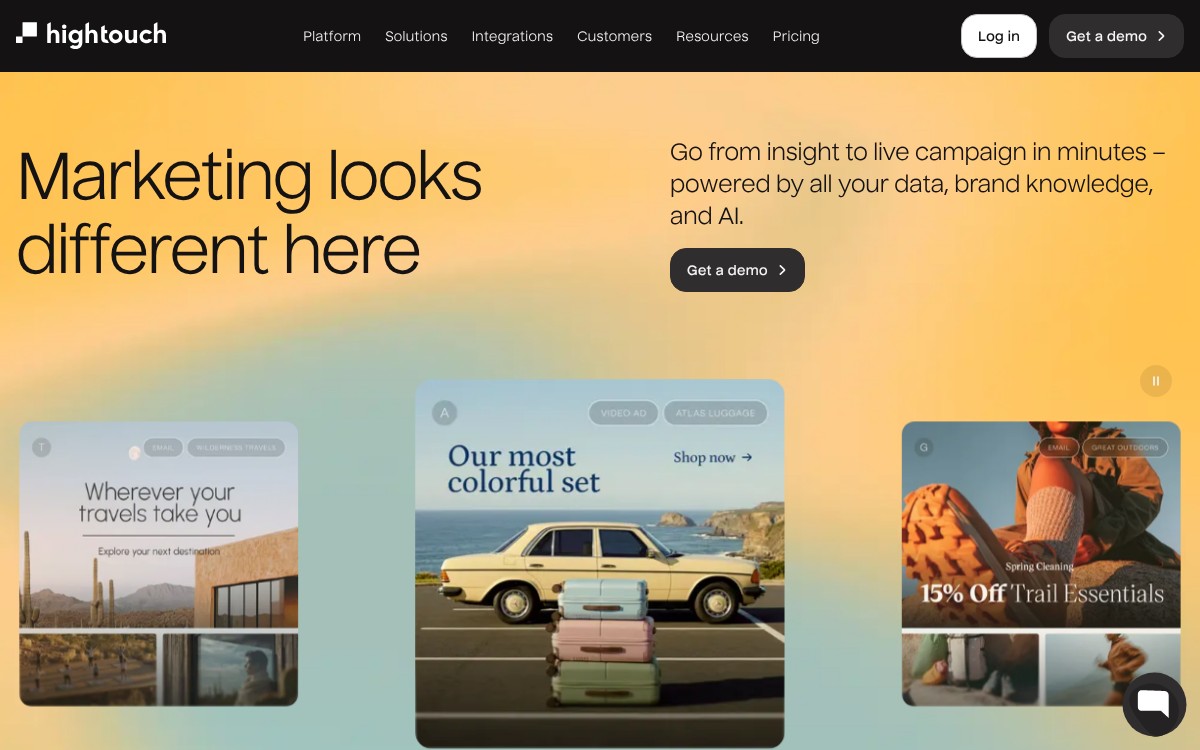
Paid tiers are quote-based, and users report costs that steepen when syncs grow from hundreds of thousands of rows to millions, or from 4 destinations to 20.
Summary: Best for teams whose warehouse is already the source of truth for customers. Skip it until your models are trusted; reverse ETL spreads bad data faster. Plans (October 2026):
- Free: 2 active syncs, unlimited destinations and seats
- Paid tiers: usage-based, quote-based; expect mid-market deployments around $25K to $60K a year
18. Microsoft Power BI
BI Layer: The Cheapest Per-Seat BI for Microsoft Shops
Microsoft Power BI raised prices on April 1, 2025, Pro from $10 to $14 and Premium Per User from $20 to $24; a 50-person team on Pro went from $6,000 to $8,400 a year.
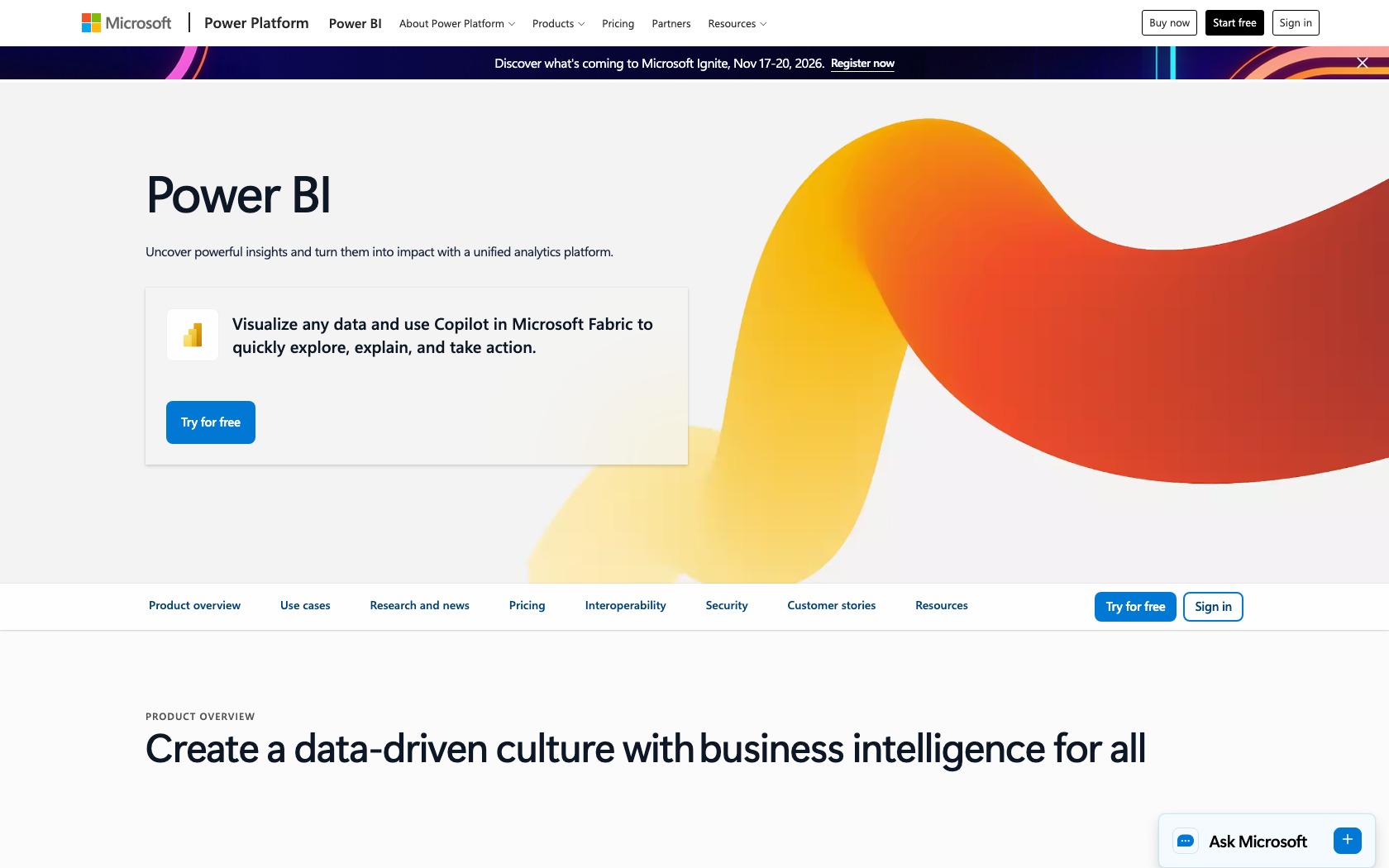
Pro caps models at 1 GB and 8 refreshes a day; PPU lifts that to 100 GB and 48. Only Fabric F64 and above lets viewers read without a license, and Copilot needs paid Fabric capacity. What users say: the licensing maze across Pro, PPU, Premium and Fabric SKUs is the main complaint.
Summary: For Microsoft shops the default; the licensing is the hard part, not the product. Plans (October 2026, per user per month, billed yearly):
- Pro: $14
- Premium Per User: $24
- Fabric capacity: from F2 at about $263 a month pay as you go
19. Tableau
BI Layer: Deep Visual Analysis, With Salesforce Paperwork
Tableau is still the analyst’s favorite canvas, so why are so many teams shopping at renewal? Salesforce paper allows renewal uplifts of up to about 7% a year, and moving from Standard to Enterprise means a 50% to 90% jump in seat price.
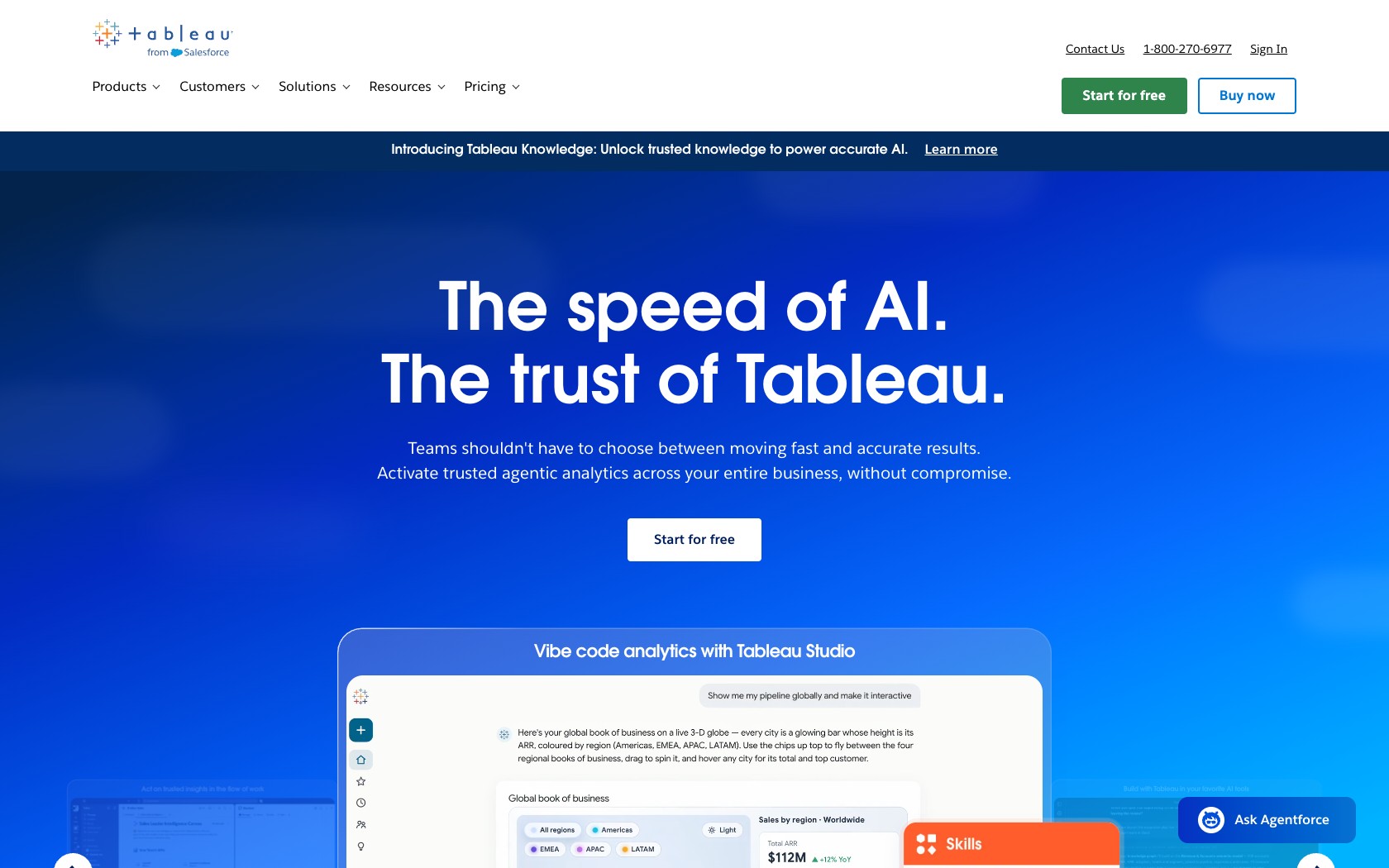
The draw is unchanged: drag-and-drop visual analysis and Tableau Next (agentic analytics on Salesforce data) from $40 per user per month. What users say: slower account-rep response since the Salesforce acquisition, and bundle pressure at renewal time.
Summary: Best for analyst teams who build exploratory views daily. Skip it if most users only read dashboards; Power BI or Metabase cost a fraction per viewer. Plans (Tableau Cloud Standard, October 2026, per user per month, billed annually):
- Creator: $75
- Explorer: $42
- Viewer: $15
- Enterprise: roughly $115, $70 and $35
- Tableau+: quote-based
20. Metabase
BI Layer: Open Source BI With Unlimited Users for Free
The open source edition is free with unlimited users and self-hosts as one container. Metabase Cloud is the managed route: 25 users cost about $2,500 a year on Starter versus about $8,400 on Pro, billed annually.
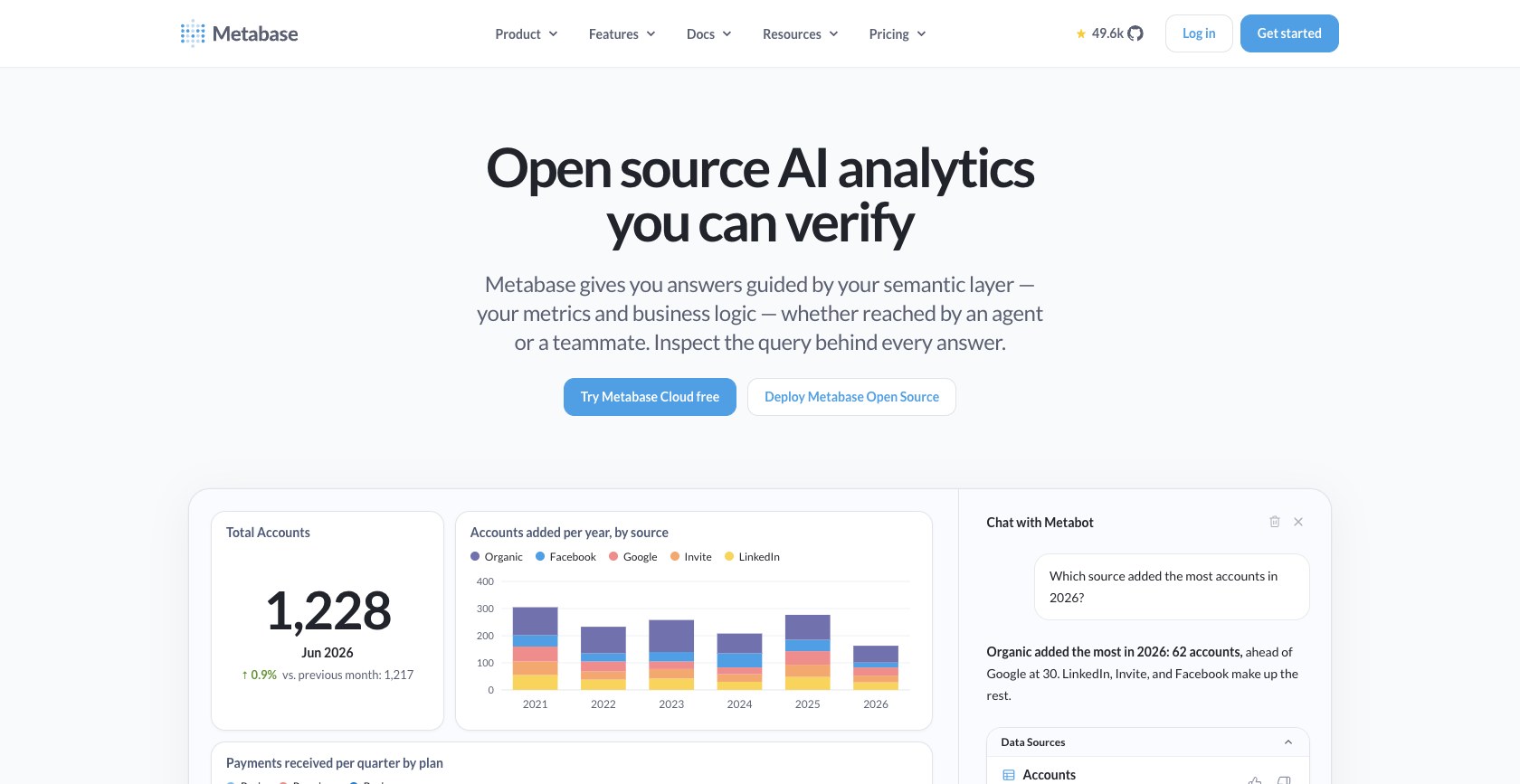
The trade is enterprise governance: row-level permissions and SSO sit in the paid tiers, and both internal and embedded users count as seats.
Summary: If you’re a small team picking your first BI tool, start here and move up only when governance demands it. Plans (October 2026):
- Open Source: free, unlimited users
- Starter: $100 a month for 5 users, then $6 per extra user
- Pro: $575 a month for 10 users, then $12 per extra user
- Enterprise: from $20,000 a year
How to Choose Data Management Tools for Your Stack
Most small teams need four tools, not twenty. Pick storage first, because every other tool is chosen for compatibility with it, then add a layer only when its pain shows up: a catalog when people can’t find or trust tables, MDM when duplicate customers break operations, observability when stakeholders find broken data before you do, and a semantic layer when two dashboards disagree on revenue. Every extra tool adds a subscription, storage growth and failure points.
| Team stage | Storage | Ingestion | Transform and orchestrate | Governance and quality | BI |
|---|---|---|---|---|---|
| Solo analyst or 1 to 3 people | BigQuery | Airbyte Cloud or Fivetran free plan | dbt Core or Developer | dbt tests | Metabase |
| 5 to 20 people | Snowflake or BigQuery | Fivetran or Airbyte | dbt plus Dagster or Astro | Atlan or self-hosted OpenMetadata; Soda or GX Core | Metabase Pro or Power BI |
| 50+ person platform org | Snowflake or Databricks (plus ClickHouse for real time) | Fivetran plus Kafka or Confluent | dbt platform plus Airflow or Astro | Atlan or Collibra; Profisee or Informatica; Monte Carlo | Tableau or Power BI |
| Microsoft estate | Fabric | Azure Data Factory or Fabric Data Factory | dbt | Purview | Power BI |
Budget by stage: early-stage stacks typically run $500 to $3,000 a month in software, growth-stage $3,000 to $15,000, and enterprise governance and MDM budgets should carry implementation services at 1x to 3x the license. On open source versus managed, self-host when you have platform engineers to own it, and buy managed when you need value in under 90 days, since open source catalogs typically take 3 to 6 months to reach production.
Final Thoughts
Fivetran now owns dbt, Census and the stewardship of GX Core; Salesforce owns Informatica and Tableau; IBM owns Confluent; SAP owns Reltio. The defense is portability: open table formats (Iceberg, Delta), Apache 2.0 cores (dbt Core, Airflow, Kafka, Metabase) and contracts without multi-year lock-ins.
Eight names from our 2024 list are gone in their old form. Alooma was acquired by Google in 2019 and wound down; Blendo folded into RudderStack in May 2020; Dataform is now a BigQuery service inside Google Cloud; Cumul.io became Luzmo; Mode became Analyst Studio inside ThoughtSpot; SAP NetWeaver MDM has given way to SAP Master Data Governance; TIBCO’s MDM line now sells as ON EBX; and Talend is Qlik Talend Cloud, with Open Studio retired on January 31, 2024. Luigi, Stitch, SSIS, Boomi, Semarchy and Reltio still exist but didn’t make the shortlist.
Start with BigQuery or Snowflake, dbt and Metabase. Add Fivetran or Airbyte and Dagster or Airflow when sources and schedules multiply. Reach for Atlan or Collibra, Profisee or Informatica, and Monte Carlo when governance, golden records and data incidents become the job.
Whatever you buy next, choose the data management tools that keep your tables in an open format and your exit cheap, and re-check the billing basis before every renewal.
Frequently Asked Questions
What are data management tools?
Data management tools are the software that moves, stores, transforms, governs and serves data across its lifecycle. In a modern stack that means one tool per layer: ingestion, a warehouse or lakehouse, transformation, orchestration, catalog and governance, MDM, quality, and BI, which is the order the list above follows.
What is the difference between master data management and a data catalog?
A catalog is descriptive and works at read time: it tells you what data exists and whether you can trust it. MDM is prescriptive and works at write time: it decides which golden record of a customer, product or supplier is allowed to exist. Governance sets the policy; MDM enforces it for core entities.
Is Talend still free?
No. Talend Open Studio was retired on January 31, 2024, and installs get no security patches. Qlik Talend Cloud, its successor, is quote-based across four editions. For free alternatives, use Airbyte Core if you can self-host, or Fivetran’s free plan up to 500,000 monthly active rows.
Is dbt Core still free after the Fivetran merger?
Yes. The merger closed on June 1, 2026, and dbt Core v2, built on the Fusion engine, ships under Apache 2.0. Combined Fivetran and dbt pricing has not been published, and both products are still sold separately; paid dbt plans start at $100 per user per month on Starter, with a free Developer plan for one seat.
Should I choose open source or managed data management tools?
Choose open source when you have platform engineers to own it and want to avoid license fees; choose managed when ops time would dominate or you need production value within 90 days. Open source catalogs typically take 3 to 6 months of engineer time to reach production.
How much does a modern data stack cost?
Early-stage teams typically spend $500 to $3,000 a month on software, growth-stage teams $3,000 to $15,000 a month, and mid-market companies $25K to $500K a year, before salaries. A 50-person B2B SaaS running Fivetran, Snowflake and Tableau lands at $1,500 to $6,100 a month in tooling.
Comments 0 Responses